

Author of
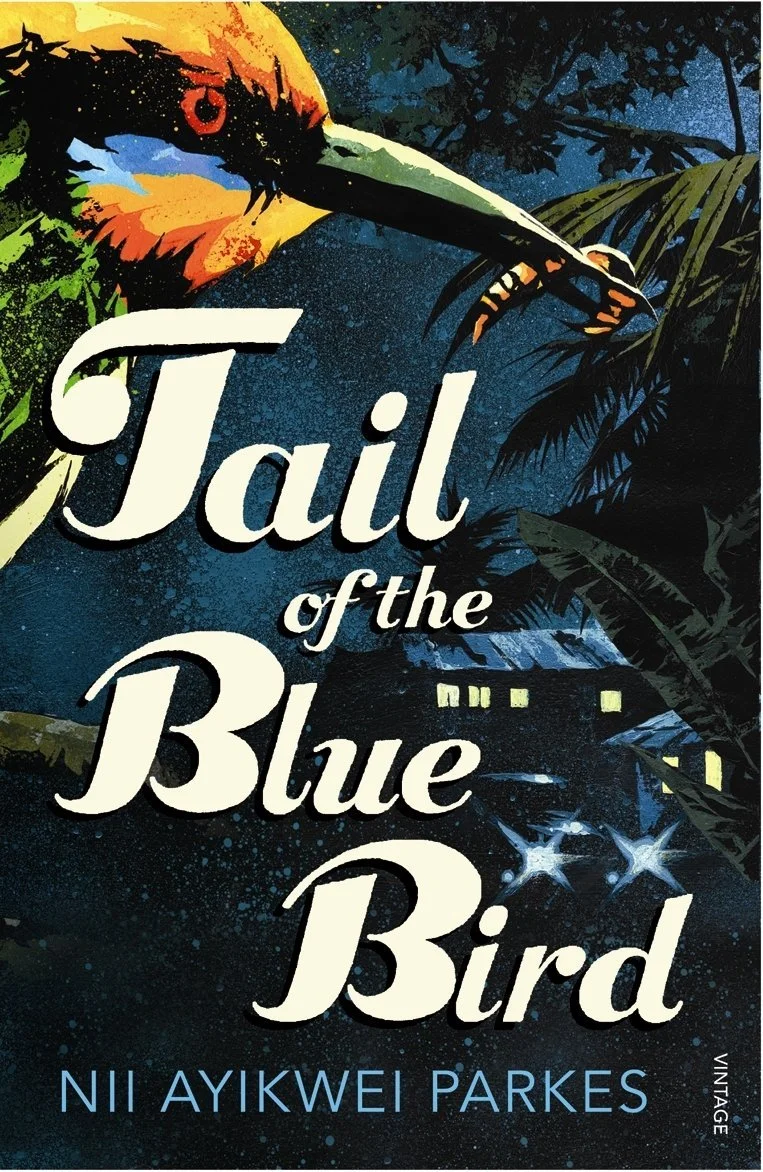
Tail of the Blue Bird (Jonathan Cape, 2009; Canongate, 2027; David R. Godine 2027)
Azúcar (Peepal Tree Press 2023)
Boys of Volta (Setanta Books 2020)
The Geez (Peepal Tree Press 2020)
Puffin Book of Big Dreams (Puffin 2020, under pen name K.P. Kojo)
Tales From Africa (Puffin 2017, under pen name K.P. Kojo)
The Makings of You (Peepal Tree Press 2010)
The Parade (Frances Lincoln 2010, under pen name K.P. Kojo)
ballast: a remix (tall-lighthouse 2009)
M is for Madrigal (tall-lighthouse 2004)
Nii Ayikwei Parkes is a Ghanaian writer, editor and publisher, who has won acclaim as a children's author, poet and novelist. Translated into multiple languages, he is the author of two novels: his début, Tail of the Blue Bird, which was shortlisted for the Commonwealth Prize and won France's two major prizes for translated fiction–Prix Baudelaire and Prix Laure Bataillon, and the recent Azúcar; two collections of poetry: The Makings of You and The Geez, which was longlisted for the Rathbones Folio Prize, shortlisted for the Walcott Prize and is a Poetry Book Society 2020 Recommendation; as well as three books for children. Nii Ayikwei has been the recipient of residencies and fellowships from the Hutchins Center for African and African American Research at Harvard University, the University of Southampton, the Civitella Ranieri Foundation, the Hawthornden Foundation, the V&A Museum and the California State University, Los Angeles. A 2007 laureate of Ghana’s national ACRAG award for literature, he serves on the boards of World Literature Today and the Caine Prize, and has served as a judge for several literature prizes including the Commonwealth Prize, the NSK Neustadt Prize and the Harvill Secker Young Translators’ Prize. In 2014 he was named one of Africa's 39 most promising authors of the new generation by the World Book Capital Africa 39 Project. Nii Ayikwei is also the founder, senior editor and publisher at flipped eye publishing, where he edits poetry and fiction, and has been responsible for the publishing débuts of award-winning writers such as Roger Robinson, Warsan Shire and Nikesh Shukla.
Nii Ayikwei Parkes
Books by Nii
TAIL OF THE BLUEBIRD (reissue forthcoming from Canongate (UK) and David R. Godine 2027)
Finalist for the Commonwealth Prize 2010
Winner of 2014 Prix Mahogany (France)
A Die Welt Top-10 Crime Book 2010 (Germany)
Sonokrom, a village in the Ghanaian hinterland, has not changed for hundreds of years. Here, the men and women speak the language of the forest, drink aphrodisiacs with their palm wine and walk alongside the spirits of their ancestors. The discovery of sinister remains - possibly human, definitely 'evil' - and the disappearance of a local man brings the intrusion of the city in the form of Kayo, a young forensic pathologist convinced that scientific logic can shatter even the most inexplicable of mysteries.
As old and new worlds clash and clasp, and Kayo and his sidekick, Constable Garba, delve deeper into the case, they discover a truth that leaves scientific explanations far behind.
PRAISE
“A delightful book that combines the basic tug of the whodunit with the more elegant pleasures of the literary novel” ― Independent
“A lyrically beautiful tale”― Arise
“A deeply complex novel; each character, every line entices the reader into feeling the beating heart of urban and rural Ghanaian lives... Parkes' steady, assured writing weaves a cosmological mystery that keeps you guessing to the very last page” ― Courttia Newland
“A brilliant new voice” ― Time Out
“A magical and engaging read” -- Margaret Busby
“An African whodunit that alludes to the troublesome relationship that lies between the modernity and custom ... Parkes has managed to write fabulously poetic and fresh prose that is both vernacular and contemporary” ― Hisham Matar
“In this tale of crime, punishment, and forgiveness Parkes' landscapes are filled with magic, his characters speak with the wisdom of the ancients; he has used his poet's sensibility to recreate for us the oral tales, fables and wonders of a world before time, a world overtaken by time” ― Helon Habila
“The novel has a compelling draw; the supernatural is undercut by a psychological authenticity with strong Freudian resonance and a very human pull...like all good detective stories of the gentler persuasion, it is a humane investigation of human failing as much as it is about crime, but it also touches on more threatening and mysterious territory” ― Times Literary Supplement
\
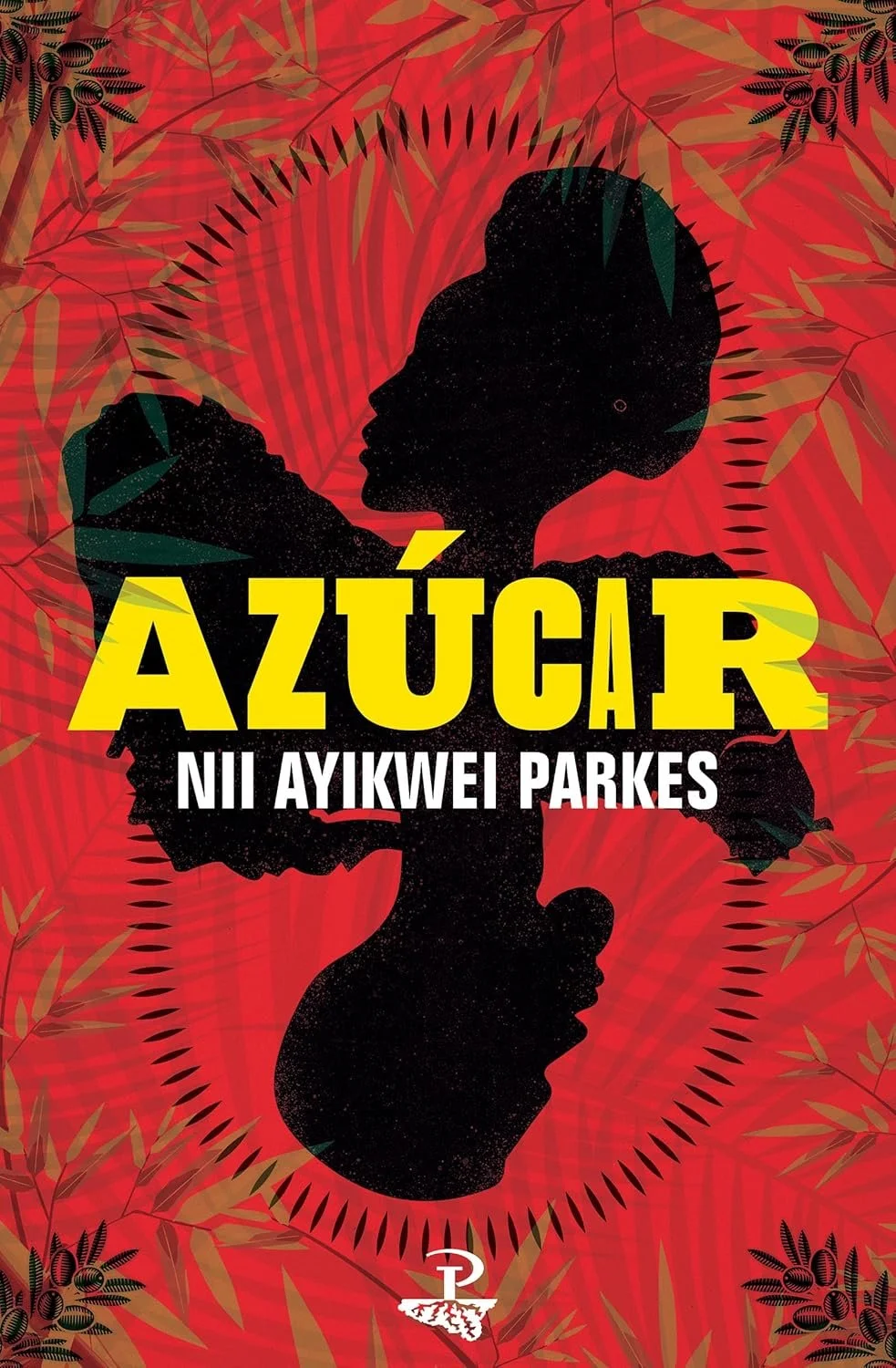
Azúcar (Peepal Tree Press 2023)
Azúcar (sugar) is a novel about belonging in a world where all things are on the move: people, ideas, foods and not least music. Oswald Kole Osabutey Jnr, henceforth Yunior, leaves his family in Accra to travel to the mythical Caribbean island of Fumaz where the revolutionary philosophy of peopleism just about keeps its flame alive against the forces of a USSRs-inspired political bureaucracy and a stifling trade blockade from imperialist USAs. Yunior brings the knowledge of the scientist, the skills of a farmer and the heart and invention of a musician to life in Fumaz. He must find some way of rescuing the island’s famed sweet rice industry from collapse; as farmer, he sees how much of his West African food has journeyed across the Atlantic to make the island’s unique cuisine; as musician he becomes part of the spirit that puts the island on the world stage, out of all proportion to its size. This is a novel of ideas – how much is accidental in the world? How much can be planned? – but it is love and death, harmony and conflict and the motives of vividly drawn characters that are the drivers of this zany narrative whose prose is as flowing, elegant and heartfelt as the music that moves freely back and forth across the seas between Africa and the Caribbean.
PRAISE
“Pays tender homage to the staying power of migrant communities... wholesome, life-affirming stuff” --Houman Barekat, The Guardian
“A fiery love story ignited by a generational saga and fueled by truly moving prose about music. Parkes’s novel doesn’t just hit close to home―it brings you there.” --Daniel Bokemper, World Literature Today
“Intensely imagined, and beautifully rendered” --Neel Mukherjee
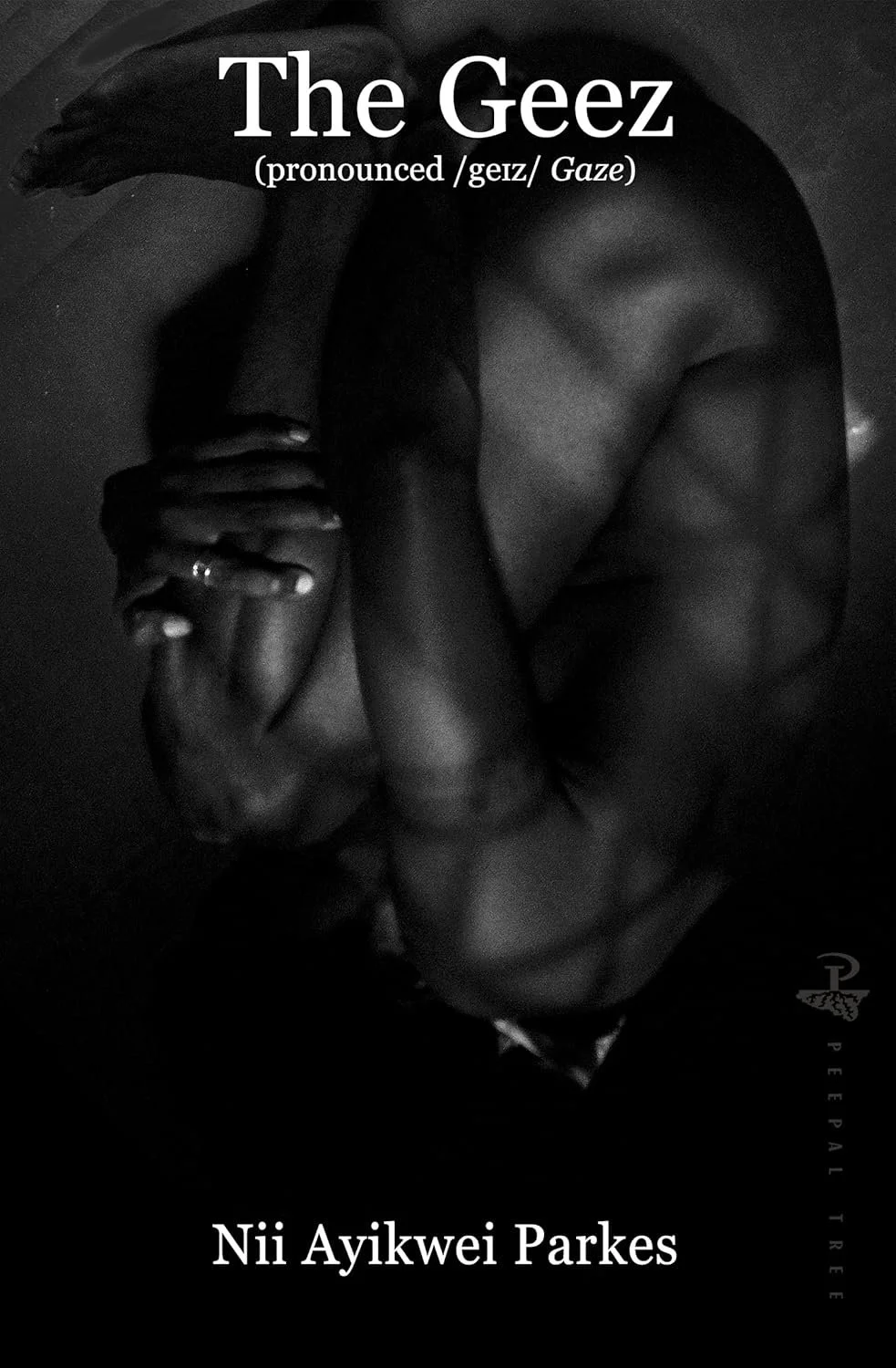
The Geez (Peepal Tree Press 2023)
A Poetry Book Society Recommednation
Finalist for the Walcott Prize
Longlisted for the Rathbones Folio Prize
Guardian Poem of the Week (for Blowing Smoke)
Concerned with the phase of life sometimes referred to as the midlife crisis, The Geez navigates the blurred lines between age and youth; the real and the imagined; what is seen and what is – what catches the gaze and what lies beneath. Conceived in four sections, the collection moves from play, to love, to gossip and - finally - to explorations of the intersections of self and contemporary culture, including a segment inspired by blues legends, riffing on the myth of the crossroads, as well as an eleven-part love letter to the African diaspora – specifically African-Americans, whose sacrifices have contributed to the still-suppressed freedoms of Black folk globally. A number of the poems in The Geez are written in a form called the Gimbal, which was developed by Nii – initially to work through his enduring grief at the loss of his father. It evokes the workings of a gyroscope – spinning but stable –a state that echoes the liminality that anchors this collection.
PRAISE
“An inventive, but also deeply meditative book. Deep and fresh musings of fatherhood, generations, sexuality, separation - and the role of music in abating pain.”—Roger Robinson
“The questing and questioning poems of Nii Ayikwei Parkes’ The Geez range across time and continents, synthesising the broad and resistant histories of the global black community, with intimate questions about love, family, parenthood and grief. Formally inventive, the collection sings with its own music and with a consciousness of the transformative power of black music in the diaspora. It is rare to find a book so fiercely political and emotionally intimate.”—Hannah Lowe
“The Geez is a core-shifting collection. Each section is an electric shock to the senses. Nii Ayikwei Parkes is a writer of precision, of ritualistic delicacy; his words are a symphony and every note in this masterpiece is a masterpiece in itself. How lucky is the reader to be taken on a journey through the self, where they are shown the real in the imagined and the imagined in the real. Each poem is a shovelling through the soil of one’s perception, the richness, the grit, the depth. This brilliant collection is the sum of breathing, of loving, loathing, thinking, believing, grieving, thirsting, reaching and reaching.”—Caleb Femi
“Nii Ayikwei Parkes addresses the lumped, pressing aches of separation with immaculate subtlety that braids wit and grievance so finely, and yet evocatively with perfect poise... The Geez is a beautiful, beautiful book."—Khaled Mattawa